Walking the PATH

Louise Allison, founder of Partners Against Trafficking Humans, and Pulaski County Sheriff Doc Holladay are just two community leaders striving to put an end to sex trafficking in Arkansas.
Feb 14
0
Comments

Local organizations join forces to combat trafficking in Arkansas.

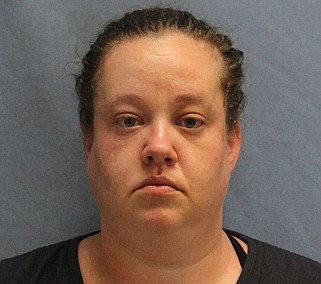
This single mother and victim of trafficking was arrested just three months ago in Little Rock. She came to Arkansas with the promise of a new job, only to find she had become part of the sexual slavery industry.

Embarrassed to tell her mother and afraid to tell her ex-husband, she felt trapped and ashamed. Police arrested her during her second trick and referred her to Partners Against Trafficking Humans, a local nonprofit that works to rehabilitate survivors.

With more than 27 million people enslaved in the world today, according to Disposable People by Kevin Bales, and approximately 17,000 trafficked into the United States, according to Crisis Aid International, Arkansas is not immune to the issue.

This young mother’s story is common, but not commonly heard on the news, or read about in the paper. Recently, more attention has been given to trafficking in this state — a direct result of increased local efforts to raise awareness and combat the problem.

Sex Trafficking in Arkansas

Visit www.slaverymap.org and to find out just how close to home this problem hits. Click on Arkansas to see the date of investigations, a criminal’s first and last name, as well as details about the charges and care of the victims. Little Rock’s Cantrell Road? Down the street from Fayetteville’s college campus? It is happening here.

“Little Rock shelters receive approximately 30 calls per month,” says Louise Allison, founder of Partners Against Trafficking Humans. The group was recently created to deal with the lack of shelter and resources available for rescued victims.

Lisette Yang of Safe Places attributes the lack of awareness to the absence of “true focus or trained professionals in the field.” With only two FBI agents assigned to deal with sex trafficking in the state, the situation is seemingly under control.

Last year the Pulaski County Human Trafficking Focus Group was established to tackle the issues of victim services, lawmaking and enforcement, and statistics gathering. The U.S. Department of Homeland Security, local churches, the sheriff’s department, the FBI, Not for Sale, Truckers Against Trafficking, Safe Places, Partners Against Trafficking Humans, Catholic Charities and other local groups form the coalition.

Clearly, with the number of calls and the large number of groups dedicated to ending the problem, sex trafficking is a very real issue. The crimes are often committed right in front of us.

What is being done

Partners Against Trafficking Humans was established in July of 2011 and has so far helped to rescue and rehabilitate a few young women. Its mission to “provide safe housing for rescued victims of human trafficking and prostitution” is one very close to the heart of Allison, the founder of PATH.

She knows what it’s like to “feel so trapped you can’t see a way out,” and aims to give survivors that “way out.”

Trafficked at the age of 14, Allison understands the importance of access to resources and information. She explained how hard it was, with no skills or training, to build a life from scratch.

When asked why she’d want to immerse herself in this world she worked so hard to escape, she quickly replies, “I don’t want others to live like that.”

While PATH is a local endeavor, Little Rock is joining a national effort. Truckers Against Trafficking was founded three years ago and aims to “educate, equip, empower, and mobilize members of [the trucking] industry to fight human trafficking.”

Truckers Against Trafficking provides training on how to detect prostitution at truck stops, as well as free webinars, educational materials and wallet information cards. The national director of the group, Kendis Paris, understands the impact the trucking industry can have.

“A girl was hitchhiking along our nation’s highways when a driver gave her a lift. He began to ask her questions and determined that she was a victim of human trafficking. He then gave her the [National Human Trafficking Resource Center] number to call and that’s how she ended up in the safe home” says Paris proudly. She explains that truckers “can use the skills and position they are in right now to really make a difference.”

Locally, Safe Places provides support services to victims of all types of violence.

Yang, the Latino Advocate Coordinator for Safe Places, says, “All the [sex trafficking] cases that we have seen have involved women between the ages of 25 and 32, all of them have been immigrant women that were tricked into illegal work opportunities and whom lack English language skills.”

Some women are reunited with their families; others “are rebuilding their lives in Little Rock.”

Safe Places is helping victims with many aspects of the process and working with other local nonprofits, like Rush Hour [Traffic] to form a stronger network.

“I have a friend named Maria who moved to the U.S. temporarily for work but was forced into prostitution. Trapped, broken and enslaved, right here in Arkansas,” recounts Emily Boedeker, founder and president of Rush Hour [Traffic].

Rush Hour [Traffic] is a local organization that stresses the importance of awareness in our community. The group has supported bills and helped to write legislation, as well as organized events to educate the community about human trafficking.

She points out that the group tries to do what is needed, and not “reinvent the wheel” by providing varied services among other organizations in the Pulaski County group. Boedeker hopes that an increase in legal action will mean an increase in available statistics.

Persistent Problems

Arkansas is far behind other states in terms of data. While websites like the polarisproject.org or slaverymap.org have the number of calls, number of victims, laws and an organization list for almost every state, Arkansas has two relevant laws listed and a few registered phone calls.

Other states have the average age of victims, the number rescued per year, etc. Arkansas is starting to gather these facts and numbers, which can help spread awareness about the issue using specifics.

Yang notes, “many times traffic victims don’t know anybody due to [the] isolation and constant surveillance that surrounds them, so reaching out or asking for help is difficult, especially if they are undocumented, non-English speaking immigrants.”

Aside from the language barriers, the legal problems of immigration complicate things further.

A young woman living with her drug-addicted, prostitute mother decided to leave home and start fresh. In Little Rock, she fell into a vicious cycle of prostitution and abuse. It took her years to find help, saying she was afraid to run away, for fear that he’d find and punish her. She trusted her pimp, saying, “I thought I found the one but I found a nightmare.”

Today she is slowly making her way on the path to recovery.

Victims often lose all sense of identity, causing them to feel guilty instead of seeing themselves as a victim. A Northwest Arkansas native, now Little Rock resident, shared her story with a local nonprofit employee and remains anonymous. She had been molested since the age of 12 and ran away to Little Rock in hopes of a better life.

She found someone who offered to buy her pretty clothes, good food and plenty of drugs (which she had not tried before). He quickly informed her that she had to “pay for her expensive bill” by prostituting herself. She felt like she owed him something, a classic mind game used by traffickers.

Local organizations work with law enforcement and provide training and outreach when requested to do so. Although law enforcement is becoming more involved and helping many victims become survivors, state laws restrict what they can do.

Human trafficking is a Class A felony punishable at both the federal and state level by life in prison. According to Stephanie Jira of Not for Sale Arkansas, no one has been charged with human trafficking under Arkansas law. Some traffickers have, however, been charged and prosecuted at the federal level. Criminals caught pimping in Arkansas receive misdemeanors or some jail time and sometimes pay a fine.

The lack of trafficking convictions at the state level has to do with some shortfalls in Arkansas law, according to www.sharedhope.org/Portals/0/Documents/ArkansasFacts.pdf. The site offers some “Arkansas Facts”: “Arkansas’ trafficking of persons law fails to specify the commercial sexual exploitation of children as a form of trafficking and requires force, fraud, or coercion for all cases of trafficking, regardless of whether a minor was involved.”

Arkansas’ location stresses the situation further. Jira explains, “We’re not a border state, we don’t share a major border, so no one was really talking about it.”

She notes that things are improving in the state, and people are becoming increasingly aware of the issue.

Awareness and Education

“It’s not a new problem, but there is a new awareness,” says Pulaski County Sheriff Doc Holladay. As part of the effort to end trafficking, Holladay is optimistic about the growing movement and increase in education on the subject.

Yang has spoken with people who don’t believe trafficking is real, but sees “the new awareness flourishing” and is reassured with “more cases of human trafficking continuing to be identified and reported.”

The Safe Places legal advocate holds a “special place in her heart” for each survivor she has met and helped. “When you learn that some of them had been trafficked by their own family members or sold to the sex industry, kidnapped, or transported from country to country, there is no way you can forget them. They are my heroes.”

The community is slowly learning what to look for and how to spot traffickers thanks to the many groups, agencies and activists working together to spread the word. Law enforcement officials, truck drivers, teachers and hotel managers can be trained to respond to a trafficking situation.

Where Arkansas stands

Arkansas remains within the bottom 10 states when it comes to anti-trafficking efforts. The issue of human trafficking is not on the radar of many Arkansans but Yang remains optimistic, “news reports are creating the needed community awareness, so information is slowly taking us there. I am confident we will get there.”

Jira says people in the community can play a strong part in the fight against trafficking. “If you see something you don’t think is right, call a nonprofit or local law enforcement. Be willing to step up. If you see something and you feel like something is wrong … it probably is.”

How to spot trafficking

Safe Places offers some common signs of trafficking:

When a person:

• Is under constant surveillance

• Is unusually afraid of law enforcement

• Exhibits numb personality and avoids eye contact with other people

• Appears malnourished, weak or sick

• Shows signs of abuse

• Has few or no personal possessions

• Does not speak for himself or herself, someone else does it for him/her

• Is unable to state where he/she lives

• His/her story changes constantly


Comments

To report abuse or misuse of this area please hit the "Suggest Removal" link in the comment to alert our online managers.

Use the comment form below to begin a discussion about this content.

Sync